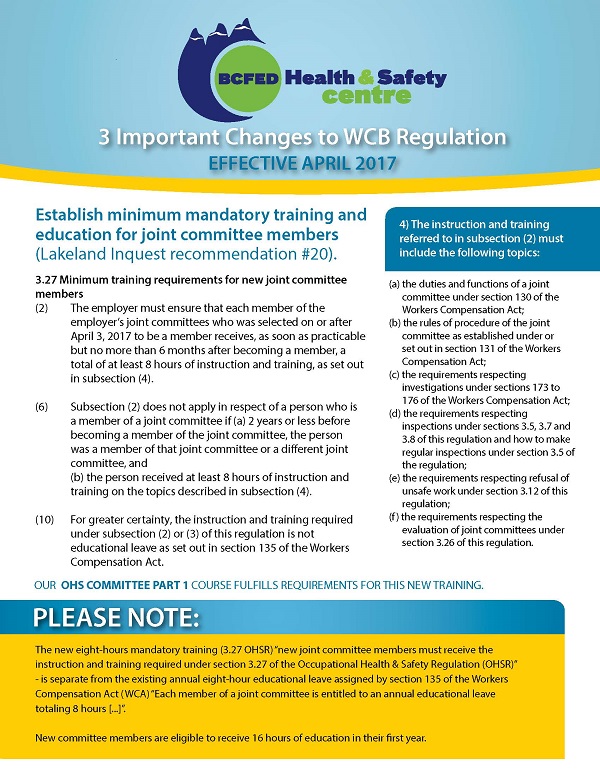
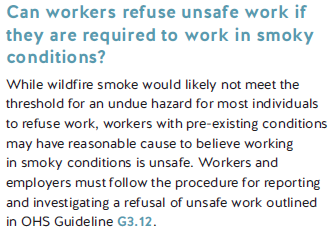
According to WorkSafe BC, Workers with pre-existing conditions may have reasonable cause to believe that working in smoky conditions is unsafe. Workers need to follow the Refusal of Unsafe Work reporting procedure and Employers need to Investigate OHS Guideline G3.12 https://www.worksafebc.com/en/law-policy/occupational-health-safety/searchable-ohs-regulation/ohs-guidelines/guidelines-part-03#SectionNumber:G3.12
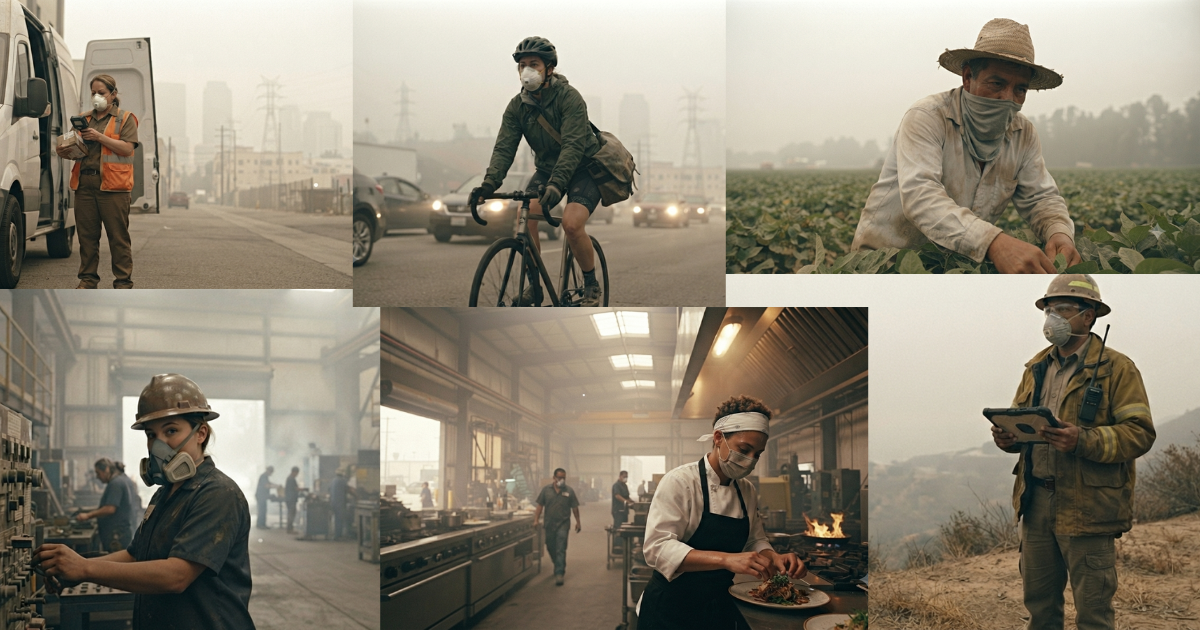
In British Columbia, wildfires and smoke are becoming more frequent and severe as the climate changes.
What's in wildfire smoke? It is a complex mixture of gases and particles that interact and change as they move away from the fire. The individual particles in wildfire smoke are very small, but they tend to stick together as they travel away from the fire. Of all the pollutants in wildfire smoke, fine particulate matter (PM2.5) poses the greatest risk to human health. The microscopic soot particles can be inhaled deep into the lungs, where they may cause inflammation and irritation. Volatile organic compounds and other gases can also irritate the eyes, nose, throat, and lungs. Read more at BC CDC.
How can it affect me? Exposure to air pollution can irritate the lungs, cause inflammation, and alter immune function.